
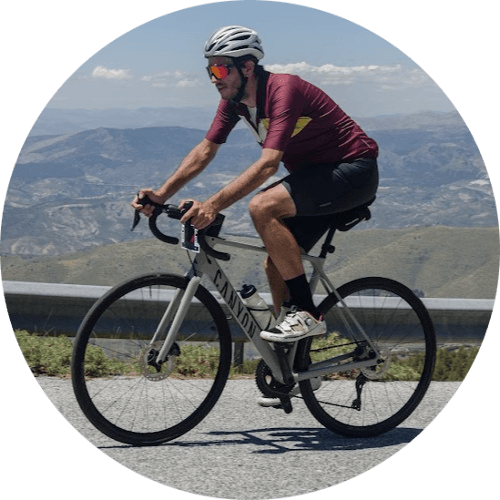
Mont Ventoux. The Beast of Provence. The Bald Mountain. At 1,909 metres, it's not the highest climb in France, but it's arguably the most legendary. Its lunar summit, rising above the Provencal lavender fields, has witnessed some of cycling's greatest triumphs and tragedies. Tommy Simpson's death in 1967, Marco Pantani's attacks in the 2000 Tour, the chaotic 2016 edition where Chris Froome famously ran up Ventoux after a crash, and countless amateur cyclists pushing themselves to their limits every summer.
What makes Ventoux special isn't just its difficulty. It's the experience. The ever-changing landscape as you climb, the exposure to the elements on the barren upper slopes, and the sense of accomplishment when you reach the iconic weather station at the summit.
In this guide, we cover the three routes to the summit (Bédoin, Malaucène, and Sault), the Mistral wind and why it deserves your respect, when to climb and why shoulder season is your friend, and essential preparation tips on training, gearing, nutrition, and clothing. We'll also touch on the descent, the famous Triple challenge, and practical information for planning your trip.


The three routes
There are three established routes to the summit, each with its own character. Your choice depends on your fitness level, what kind of challenge you're looking for, and what experience you want from the climb.
1. Bédoin - the classic route

Bédoin is the Ventoux climb. This is the route the Tour de France typically uses, and the one most cyclists choose for their first ascent. It's also the hardest.
The climb starts gently through the village of Bédoin and the surrounding vineyards. Don't be fooled. The first 6 kilometers are a warm-up, averaging around 4-5%. Then you hit Saint-Esteve, and everything changes.
From Saint-Esteve to Chalet Reynard (15 km of climbing), the gradient rarely drops below 9%. This is the hardest part of the climb. The road cuts through dense forest with endless stretches of constant 9-10% gradient - no views, no corners to break the monotony, just trees and the road ahead. While the forest provides shade from the sun, don't be fooled into thinking it's easier. The humid, still air can be oppressive, and the forest is notorious for swarms of mosquitoes, especially in the morning and evening. The relentless gradients and unchanging scenery make this mentally challenging - you have no idea how far you've come or how far you have to go. This is where many cyclists crack. The key is to find your rhythm and stick to it. Don't look at your speed, don't think about how much further you have to go. Just grind away, kilometer after kilometer, unable to see the summit or gauge your progress. This is where the climb becomes a true test of will.
At Chalet Reynard (km 15.5), you emerge from the forest and get your first view of the summit. This is where you get your spirits up - you've made it through the hardest part. The gradient eases to around 8% average for the final 6 kilometers, which feels significantly more doable after the relentless forest section. The iconic weather station tower looks close, but don't be deceived - there's still substantial climbing to be done.
The final stretch across the moonscape is where Ventoux reveals its magic. The white limestone rubble creates an otherworldly atmosphere, and the views are absolutely amazing. On a clear day, you can see the Alps and even the Pyrenees stretching to the horizon. Just keep in mind that there's no shade up here, and on a windy day, you'll need all your strength to stay on your bike.
Who should climb from Bédoin: Experienced cyclists looking for the classic, most challenging Ventoux experience. If you only climb Ventoux once, this should probably be the route.
2. Malaucène - the scenic alternative

Malaucène, on the west side of the mountain, is often considered the most beautiful of the three routes. It's a smidge less difficult than Bédoin, but don't underestimate it. The gradients aren't as constant as the Bédoin side, and it's a bit more capricious, which makes it difficult to find your rhythm.
The route starts from the charming Provencal village of Malaucène with a mild start when leaving town, similar to Bédoin. But the climbing gets serious soon enough.
The first 5 kilometers average around 7-8% through mixed forest. The road then kicks up to 9-10% for a sustained section that will test your legs.
One advantage of Malaucène is the variety. The gradient fluctuates more than on Bédoin, giving you occasional moments of respite. You'll also pass through more varied scenery, including open meadows with views across the valley.
The final 6 kilometers from the junction with the Sault road are shared with the other routes. You'll emerge onto the exposed summit section and face the same lunar landscape and potential wind. The last kilometers are slightly steeper from this side, averaging around 9%.
Who should climb from Malaucène: Cyclists who want a challenging climb with more scenic variety than Bédoin. Also a good choice if you want to descend via Bédoin, as Malaucène's descent is considered more technical.
3. Sault - the accessible route

Sault is the longest but easiest route to the summit. Starting from the higher-altitude town of Sault (famous for its lavender fields), you have less elevation to gain and gentler gradients to contend with. This makes it an excellent choice for less experienced climbers or as a recovery route if you're doing multiple ascents.
The route begins with a slight descent from Sault down to the valley bottom, then gently meanders upwards. The first 20 kilometers are genuinely pleasant. The gradient rarely exceeds 5-6%, the road winds through beautiful lavender fields (spectacular in June and July) and pine forests, and the climbing feels almost easy compared to the other routes. Unlike the Bédoin and Malaucène routes, there are no milestone markers between Sault and Chalet Reynard, and the route is far quieter with fewer cyclists and cars.
Don't let this lull you into a false sense of security. The climb changes dramatically at Chalet Reynard (km 20), where you join the Bédoin route for the final 6 kilometers to the summit. Those final kilometers are the same exposed, windy moonscape, averaging 8-9% gradient, that breaks riders from both other directions.
The contrast between the gentle, shaded first 20 kilometers and the brutal final 6 can be a shock to the system. Many cyclists who've been spinning along comfortably suddenly find themselves in trouble when the road steepens and the wind hits.
Who should climb from Sault: First-time Ventoux climbers who want to reach the summit without the extreme challenge of Bédoin or Malaucène. Also perfect for training rides, repeat ascents, or cyclists building up to the harder routes.
Route comparison
| Route | Distance | Elevation | Avg % | Character |
|---|---|---|---|---|
| Bédoin | 21.5 km | 1,612 m | 7.5% | Relentless, classic |
| Malaucène | 21.2 km | 1,570 m | 7.4% | Scenic, varied |
| Sault | 25.7 km | 1,185 m | 4.6% | Gentle, accessible |
A word of warning
People die on Mont Ventoux every year. This is not hyperbole. The mountain claims the lives of amateur cyclists regularly, with many more suffering serious injuries. In fact, every time I climbed the Ventoux, an ambulance was heading up and I found multiple cyclists vomiting on the side of the road.
Because so many people have climbed Ventoux - everyone seems to know somebody who's done it - there's a dangerous tendency to underestimate this mountain. Don't. The Beast of Provence earned its name. Treat it with the respect it demands.
There's a defibrillator at Chalet Reynard, two-thirds of the way up, donated by the wife of a Belgian amateur cyclist who died on an ascent. Let that sink in before you start your climb.
The Mistral: Ventoux's invisible enemy
Mont Ventoux literally means "Windy Mountain" - and it earned that name. The Mistral, the fierce north wind that funnels down the Rhône Valley, batters the Ventoux ridge 130 days per year. Wind speeds at the summit have been recorded as high as 320 km/h. That's not a typo. Three hundred and twenty kilometers per hour.
The Mistral is not a minor inconvenience - it's a legitimate safety hazard. When blowing at full strength (80-100 km/h gusts), the wind can physically stop your forward progress or blow you across the road. Riders have been knocked off their bikes on the exposed summit section. When sustained winds exceed 100 km/h, the road closes completely.
Above Chalet Reynard, the treeline ends and you enter what locals call the "lunar desert" - a barren, white limestone landscape with zero shelter. For 6 kilometers, you're completely exposed to whatever the mountain throws at you. Crosswinds push riders across the road, headwinds reduce progress to a crawl, and sudden gusts can stop you dead.
Check the forecast religiously. Use Windy.com or Windfinder.com to see real-time summit conditions. If sustained winds above 60 km/h are forecast, seriously consider postponing. Fighting 80 km/h headwinds on the final 6 km isn't heroic - it's foolish. The wind typically increases through the day, making early morning climbs safer.
One advantage worth noting: the Malaucène route is better sheltered from the Mistral than Bédoin. If conditions are borderline, this might tip the balance.
When to climb
The road to the summit is typically open from late April or early May through to November, depending on snow conditions. Winter brings snow and bitter cold - this is not a year-round destination.
The best times
May, June, September, and October are the optimal months for climbing Mont Ventoux. These shoulder seasons offer the best balance of pleasant temperatures, calmer winds, and fewer crowds. May and June bring spring freshness and blooming landscapes, while September and October offer stable weather before the winter cold sets in. Even during these months, it's wise to start early in the morning to avoid any chance of afternoon storms or increasing winds.
The lavender around Sault blooms in late June and July, adding spectacular colour to that route if you time it right. The region is particularly beautiful during these months, with the lavender fields creating an unforgettable backdrop to your climb.
Summer
July and August bring the heaviest traffic - both cyclists and tourists in cars. More concerning is the heat. When it's 30°C in Bédoin, the exposed summit section becomes a furnace. The white limestone reflects the sun, there's no shade, and dehydration becomes a serious risk. Remember: Tommy Simpson died on a day when temperatures exceeded 40°C.
If you must climb in high summer, start before 7am. You'll beat the worst heat, avoid the crowds, and the winds are typically calmer in the morning. Carry extra water and be prepared to turn back if conditions deteriorate.
Summer also brings inexperienced drivers to the mountain roads - drivers inexperienced driving up mountains who may not expect cyclists around blind corners. Be visible and be vigilant.
Temperature extremes
The temperature difference between the valley and summit can reach 15-20°C. On a warm 30°C day in Bédoin, the summit may be 10°C - and with wind chill, it can feel much colder. Arriving at the top soaked in sweat, exhausted, and facing near-freezing wind chill is a recipe for hypothermia.
Preparation and tips
Training: this cannot be improvised
Mont Ventoux demands specific preparation. The Bédoin ascent requires a solid endurance base, substantial hill work, and acclimatisation to prolonged effort. You'll be climbing for 1.5 to 3 hours depending on your fitness. If your longest recent climb is 30 minutes, you're not ready.
One cyclist reported cycling 2,500 km in preparation and still felt underprepared. Include hills in your training - lots of them. Flat kilometers don't translate to mountain climbing fitness. Practice sustained efforts at threshold, because that's what Ventoux demands.
Gearing
Bring your lowest gears. A compact chainset (50/34) with an 11-32 or even 11-34 cassette is recommended for most cyclists. There's no shame in spinning up Ventoux. The sustained gradients will exhaust even strong climbers, and having an easier gear when you need it can save your ride.
Hydration and nutrition
Carry at least two bottles, especially in summer. The Bédoin route has limited water stops once you leave the village. There are cafes at Chalet Reynard on the Bédoin route and at various points on all routes, but don't rely on them being open.
Eat before you're hungry. The climb takes most cyclists between 1.5 and 3 hours depending on fitness. Bring enough food for the duration and start eating early in the climb.
Clothing: non-negotiable
Always bring a windproof jacket, even on the hottest days. This is non-negotiable. The lunar landscape above Chalet Reynard offers zero shelter. You'll arrive at the summit sweaty and exhausted, then face potential 50+ km/h winds and temperatures 15-20°C colder than at the base. Without proper protection, hypothermia is a real risk.
Pack arm warmers, a gilet, and consider lightweight gloves and a cap. The descent is long and cold. Cyclists regularly underestimate how brutally cold 40+ minutes of descending can be when you're already depleted from the climb. Your jersey pockets should contain more clothing than food.
Pacing
Start slower than you think you should. The most common mistake on Ventoux is going too hard too early. The climb is long, and the second half is harder than the first. If you're blowing up in the forest section of Bédoin, you started too fast.
Use a power meter or heart rate monitor if you have one, and stick to your plan. A sustainable effort over 2 hours beats a heroic effort for 30 minutes followed by a survival crawl.
The Tommy Simpson memorial
There's also tragedy here. About 1.5 kilometers from the summit on the Bédoin side, you'll pass the memorial to Tommy Simpson, the British cyclist who collapsed and died here during the 1967 Tour de France. On your way down, you may want to pay your respects. Many cyclists stop here, leaving water bottles, cycling caps, or simply pausing for a moment of reflection. It's a poignant reminder of both the mountain's history and its severity.
The descent
After conquering the climb, you still have to get down. The descents from Ventoux are long and require concentration.
Bédoin descent: Fast and flowing once you're through the forest, but watch for sharp corners and poor road surface in places. The forest section can be cold even after a hot climb.
Malaucène descent: More technical with tighter hairpins and steeper sections. The road surface is generally good, but take care on the upper sections where gravel can wash onto the road.
Sault descent: The easiest of the three, with gentle gradients and sweeping curves. A good choice if you're tired or less confident descending.
Whichever route you descend, dress warmly. You'll have been climbing for over an hour, probably sweating, and the wind chill on the descent can be severe. Many cyclists have been caught out by hypothermia on the way down.
Bonus for the ones with energy to spare: Les Gorges de la Nesque is beautiful and worth it to ride through after the Ventoux. This stunning canyon offers one of the most scenic cycling routes in Provence, with the road winding through dramatic limestone cliffs and offering spectacular views. It's an excellent way to extend your ride if you still have legs left.
Climbing times: what to expect
Understanding typical climbing times can help you set realistic expectations and pace yourself appropriately. Times vary significantly based on fitness level, conditions, and which route you choose.
The Bédoin route
This is the route where records are set. Professional cyclists typically complete the 21.5 km climb in 60-75 minutes. The current record, set during the 2025 Tour de France, belongs to Tadej Pogačar who completed the ascent in an astonishing 53 minutes and 47 seconds.
For recreational cyclists, completion times vary widely. Fit, well-trained cyclists can typically reach the summit in 1.5 to 2 hours. Average recreational riders usually take between 2 to 2.5 hours, while less experienced climbers or those taking a more leisurely approach might take 3 hours or more. Don't be discouraged by longer times - finishing is an achievement regardless of pace.
The Malaucène route
Times are generally similar to Bédoin, with slightly faster times possible due to the marginally easier gradient and more varied pacing opportunities. Add 5-10 minutes for most riders compared to Bédoin times.
The Sault route
Being longer but gentler, the Sault route typically takes 2-3 hours for recreational cyclists. The first 20 km can feel relatively easy, but the final 6 km from Chalet Reynard are the same challenging stretch as the other routes, so overall times are still substantial.
Remember: These times assume good conditions. Wind, heat, and your preparation will significantly affect your actual time. It's far better to pace yourself conservatively and finish comfortably than to blow up halfway up and struggle to the summit.
Exploring the region: points of interest
Mont Ventoux sits in the heart of Provence, surrounded by some of France's most beautiful and historic attractions. Make time to explore the region beyond the climb - it's worth staying a few days.
Historic villages and towns
Gordes and Roussillon are among the most picturesque villages in the Luberon region. Gordes is a hilltop village with stunning architecture and views, while Roussillon is famous for its ochre cliffs and colourful buildings. Both are perfect for post-ride exploration and offer excellent Provençal cuisine. Near Gordes, don't miss the Abbaye de Sénanque, a stunning 12th-century Cistercian abbey surrounded by lavender fields - one of Provence's most photographed locations, especially in July when the lavender is in full bloom.
L'Isle-sur-la-Sorgue, known as the "Venice of Provence," is a charming town built on canals with numerous waterwheels. It's famous for its Sunday antiques market (one of the largest in France) and its many art galleries. The crystal-clear Sorgue River flows through the town, creating a unique and picturesque setting perfect for a leisurely stroll after your ride.
Vaison-la-Romaine, just a short drive away, features impressive Roman ruins including a 2,000-year-old bridge still in use today and extensive archaeological sites. The medieval upper town offers beautiful views over the surrounding countryside. The town also hosts a vibrant Tuesday market that's worth visiting.
Avignon, the historic papal city, is about 45 minutes away. The famous Palais des Papes (Palace of the Popes) and the Pont d'Avignon are UNESCO World Heritage sites. The city's historic centre is perfect for exploring on foot or by bike. Don't miss the annual Festival d'Avignon in July if you're visiting during that time.
Aix-en-Provence, about an hour's drive south, is a beautiful university town known for its elegant boulevards, fountains, and vibrant café culture. The Cours Mirabeau is one of France's most beautiful streets, lined with plane trees and 17th-century mansions. Aix was the home of Paul Cézanne, and you can visit his studio and the surrounding countryside that inspired many of his paintings.
Arles, about an hour southwest, is a treasure trove of Roman history. The well-preserved Roman amphitheatre (still used for bullfights and concerts), the ancient theatre, and the Alyscamps necropolis are all UNESCO World Heritage sites. Arles was also home to Vincent van Gogh, and you can follow a walking trail to see the locations he painted. The town hosts excellent markets and is a gateway to the Camargue region.
Nîmes, about an hour west, boasts some of the best-preserved Roman monuments in France. The magnificent Arena of Nîmes (still hosting events), the Maison Carrée (a perfectly preserved Roman temple), and the Pont du Gard aqueduct nearby are all must-see attractions. The city has a vibrant atmosphere with excellent restaurants and a strong Spanish influence from its history.
Orange, about 30 minutes away, is home to another spectacular Roman theatre, one of the best-preserved in the world. The theatre's stage wall is still intact, and the site hosts an annual opera festival. The town also features a triumphal arch and charming Provençal streets.
Carpentras, just 15 minutes from Bédoin, is a historic town with a beautiful old centre, a 14th-century synagogue (one of the oldest in France), and a Friday market that's one of the region's best. The town makes for an easy post-ride visit.
Fontaine-de-Vaucluse, near L'Isle-sur-la-Sorgue, is where the Sorgue River emerges from a massive spring at the base of a cliff. The source is one of the most powerful in France, and the village is a popular but beautiful spot, especially in spring when the water flow is at its peak.
Natural attractions
Gorges de la Nesque is a stunning canyon that offers one of the most scenic cycling routes in Provence. The road winds through dramatic limestone cliffs and offers spectacular views. It's an excellent add-on to your Ventoux ride or a beautiful ride in its own right.
The Lavender Fields around Sault are at their peak in late June and July. The Plateau de Sault becomes a sea of purple during this period, creating one of Provence's most iconic landscapes. Even outside peak bloom season, the area offers beautiful rolling hills and Provençal scenery. The lavender fields around the Abbaye de Sénanque near Gordes are equally spectacular and make for stunning photographs.
The Mont Ventoux Regional Natural Park offers numerous hiking trails and viewpoints. The Dentelles de Montmirail, a small mountain range visible from Ventoux, provides excellent rock climbing and hiking opportunities. The area is also known for its truffle hunting in season.
The Luberon Regional Natural Park, just south of Ventoux, is a protected area of outstanding natural beauty. It encompasses picturesque villages, olive groves, vineyards, and diverse landscapes perfect for cycling and hiking. The park is home to numerous species of birds and wildflowers.
Wine and culture
The region produces excellent wines, particularly Côtes du Ventoux AOC wines. Many wineries in the area offer tastings and tours. After your climb, there's no better reward than sampling local wines and Provençal cuisine in one of the charming village restaurants.
The starting villages themselves - Bédoin, Malaucène, and Sault - each have their own charm. Bédoin has a lovely central square perfect for post-ride coffee and people-watching. Malaucène offers beautiful Provençal architecture, and Sault hosts weekly markets that are a feast for the senses.
Practical information
Getting there
The nearest airports are Marseille (about 1.5 hours by car) and Avignon TGV station (about 45 minutes). The towns of Bédoin, Malaucène, and Sault all have accommodation options ranging from campsites to boutique hotels.
Bike services
Bédoin has several bike shops and rental options. If you're flying in, renting a road bike locally can be more convenient than travelling with your own. Book ahead in summer as demand is high.
Road status
Check the road status before you travel, especially early or late in the season. The summit road can close at short notice due to weather conditions. Local tourist offices can provide up-to-date information.
The triple: conquering all three routes
For the truly ambitious, the "Club des Cinglés du Mont Ventoux" (Club of Mont Ventoux Madmen) offers a unique challenge: climbing all three routes in a single day. Established in 1988, this exclusive club has over 15,500 members worldwide who have achieved this extraordinary feat. The challenge involves approximately 136-137 kilometers of riding with a total elevation gain of 4,400 metres.
The typical sequence involves ascending from Bédoin first (the hardest while you're fresh), descending to Malaucène and climbing back up, then descending to Sault and returning to the summit for the third and final time. The strategy is as much about pacing and nutrition as it is about fitness. Many cyclists complete the triple in 8-12 hours, depending on their ability and conditions.
Successfully completing this challenge earns you an official certificate and membership in this exclusive club - a badge of honour among cyclists. If you're attempting this, start early (dawn is not too early), carry plenty of food and hydration, and consider having a support vehicle if possible. The Triple is not just a test of physical endurance, but also of mental resilience and preparation.
Final thoughts
Mont Ventoux is more than just a climb. It's a pilgrimage. The mountain has a presence that's hard to describe until you've experienced it. The way it dominates the landscape, visible from kilometers away. The eerily beautiful lunar summit. The sense of history on every switchback.
Choose your route based on your ability and what you want from the experience. If you want the full Ventoux challenge, climb from Bédoin. If you want beauty and variety, choose Malaucène. If you want to reach the summit without breaking yourself, Sault will get you there.
Whichever route you choose, respect the mountain. Prepare properly, pace yourself wisely, and savour the experience. Standing at the summit, looking out over Provence with the wind in your face, you'll understand why cyclists have been drawn to this mountain for over a century.
Bonne route.
Hendrik Bulens
The average cyclist exploring cycling routes worldwide, particularly in Andalucía, Spain. Sharing expert guides on scenic bike routes for regular cyclists planning their next adventure.
Ride these routes
Routes from the area mentioned in this article.

Mont Ventoux
The giant of the Provence is strictly not speaking in the Alps, but it's close enough to feature in this section.
Related Articles
The complete guide to climbing Mont Ventoux
Everything you need to know about cycling the Beast of Provence. We cover all three routes: Bédoin, Malaucène, and Sault.

10 epic road rides in Andalucía
Discover 10 epic road cycling routes in Andalucía, Spain. Perfect for scenic rides, challenging climbs, and unforgettable cycling adventures.

Top 5 cycling routes in Girona
Discover the best cycling routes in Girona for your next holiday. Scenic climbs, quiet roads, and unforgettable rides in Catalonia's cycling paradise.